
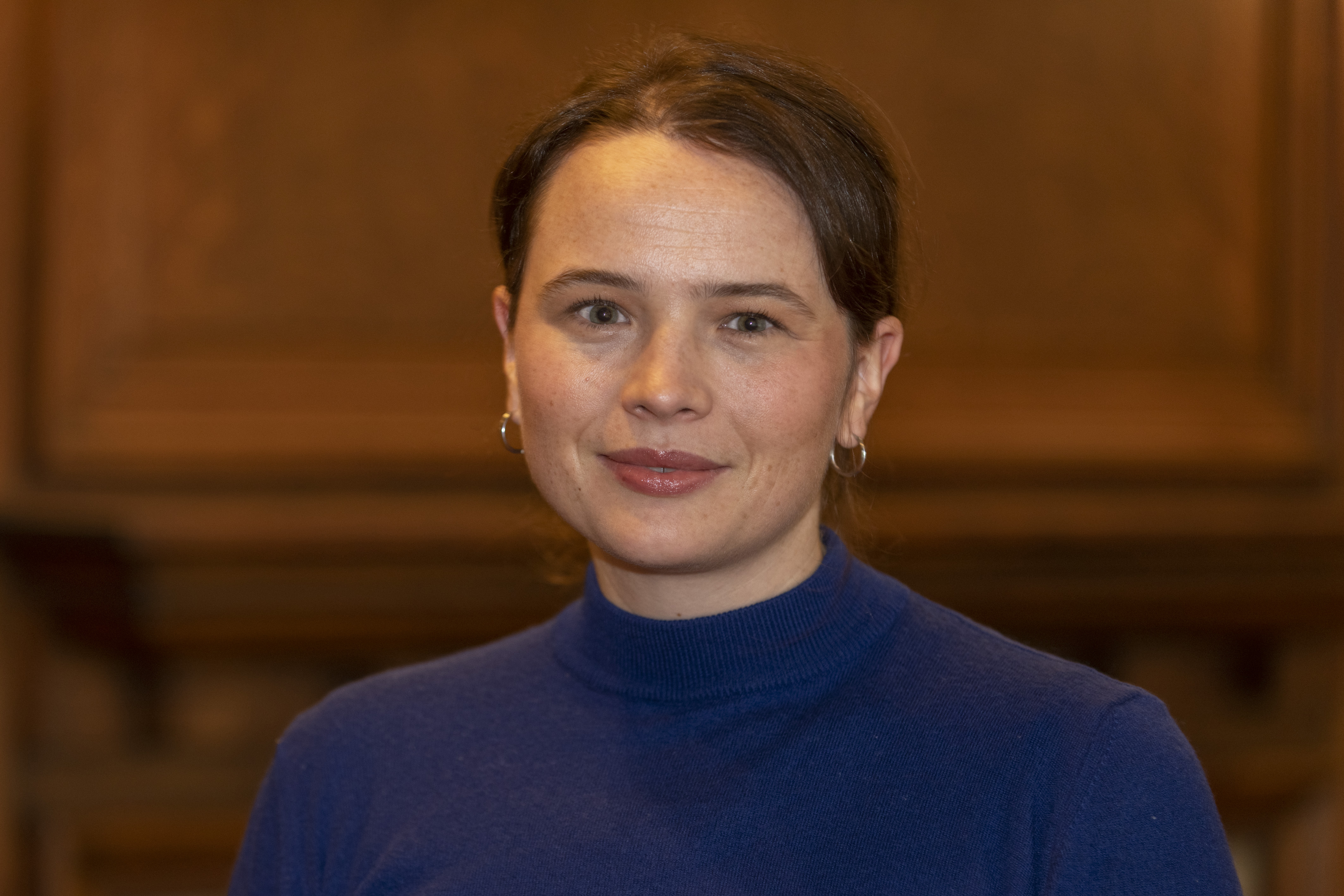
Laura Fürsich
I am a Postdoctoral Fellow at the Institute for Analytical Sociology (IAS) at Linköping University. My research examines how social inequalities emerge and persist through the interplay of social networks, residential space, and institutional structure.
I approach these questions through the lens of complex systems and analytical sociology, treating populations and cities as systems in which micro-level interactions generate and are constrained by macro-level patterns of stratification. A central thread in my work is consolidation: the degree to which social dimensions such as ethnicity, class, education, and geography align with one another. Highly consolidated structures channel opportunity, contact, and mobility in ways that reproduce inequality, while cross-cutting structures open pathways for integration and change. Understanding when consolidation tightens or loosens is, I argue, essential for explaining the durability of segregation, wage gaps, and intergroup boundaries.
As a computational social scientist, I combine agent-based modeling, information theory, network analysis, and discrete choice models with large-scale administrative data from Sweden and the Netherlands.
Projects
Dissertation
How do social contexts shape interaction opportunities, influence networks, and drive segregation patterns?
Social Networks and Residential Segregation
I model segregation by examining how social contexts shape interaction opportunities, influence networks, and drive segregation patterns.
Mapping the Complete Network of the Swedish Population
We map a full-population multiplex network to understand
integration and stratification across domains
Complex Systems Approach to Life Course Research
I use advances in information theory and statistical modeling to untangle how location, demographics, and education shape income trajectories over the life course.
Residential Consolidation
How does the correlation of attributes shape residential segregation and collective efficacy?
Urban Growth
How do patterns of residential sorting and neighborhood selection cumulatively shape long-run urban inequality and growth?
Teaching
I am teaching in the Master’s program in Computational Social Science at LiU in the following courses:
- Agent-Based Modeling
- Segregation and Inequality
- Behavioral Mechanisms in the Social Sciences
If you are interested in working with me for your Master’s thesis, please reach out.
Other Materials
I replicated Reardon et al. 2008 using the SEG package in R. You can find the repository here.
Projects at Graduate Workshop in Computational Social Science at Santa Fe Institute in 2022: Here’s a list of all the projects we worked on during our time in Santa Fe.


